February 23, 2016

誰にでも太陽光の恩恵を! 米加州が貧困層向けに300MWを設置支援

Published at Nikkei Business Online ---  ここ数年、太陽光発電システムの価格が大幅に低下したが、米国ではいまだに太陽光発電は「お金に余裕のある家庭用のもの」とされている。そんなイメージがカリフォルニア州で変わろうとしている。

 昨年10月、カリフォルニア州のJerry Brown知事は低所得世帯に太陽光発電(PV)導入を促進する米国最大規模の法律案(低所得者向け賃貸集合住宅用にソーラープログラム)に署名し、同法を成立させた。このプログラムの年間予算は1億米ドルで、10年間の実施が予定されている。

 カリフォルニア州太陽光発電産業協会(CALSEIA)でエグゼクティブディレクターを務めるBernadette Del Chiaro氏は、「この法律はカリフォルニア州にとっても重要な新しいプログラムです。なぜなら、賃貸を含めた全ての電力消費者が、汚染を出さない太陽光発電の恩恵を、住んでいる場所、または働いている場所で得られるようになります」と、語った。

Credit: Everyday Energy
このプログラムを通し、同州は、少なくとも300MWの太陽光発電システムを低所得者向け賃貸集合住宅に導入する目標を掲げている。「最低300MWです。我々はどちらかというと500MWを目指しています」と、米Everyday Energy社でCEO(最高経営責任者)を務めるScott Sarem氏は語った。同社は、カリフォルニア州サンディエゴ市に本社を置き、同州において、低所得者向け賃貸集合住宅用への太陽光発電システムの設置量でナンバーワンであり、さらにこの法律の提案書作りにも大きく貢献した。

 「このプログラムは『必要性』から生まれました」と、Sarem氏は続けた。カリフォルニア州の太陽光発電設置導入量は米国で最も多く、低所得者向けアパート用太陽光発電の補助金制度に関しても、実は前から取り入れていた。しかし、幅広く利用されず、成功を収めたとは言えなかった。.. Read More Here

February 2, 2016

California Bridges the Green Divide with Nation’s Biggest Solar Program for Low-income Renters

Published at Renewable Energy World --- Solar is not just for homeowners. The advent of community solar is now enabling those who don’t own a home to go solar and enjoy all of its benefits. But regardless of whether someone decides to own or rent, solar still seems to be for those who have a disposal income. That is, until now.

Last October, California Gov. Jerry Brown signed the nation’s largest solar bill for low-income renters. The Multifamily Affordable Housing Solar Roofs Program was created under AB693, which will dedicate about $100 million per year over a period of ten years.

“AB 693 is a very important new program for California because now, all consumers, including renters can enjoy the benefits of pollution free solar electricity generated right where we live and work,” Bernadette Del Chiaro, executive director of California Solar Energy Industries Association (CALSEIA), said.

The new program has the goal to install at least 300 MW of rooftop solar PV on multifamily affordable housing projects.

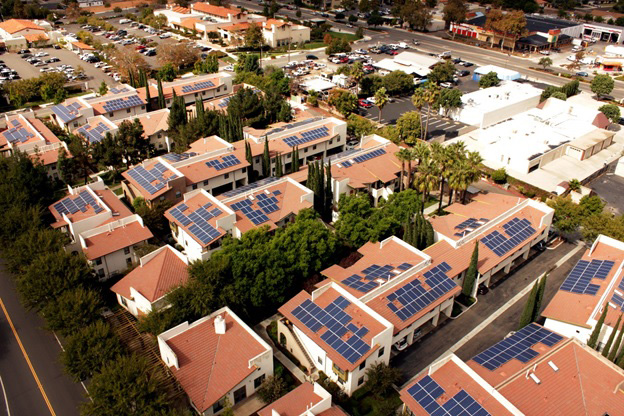
464 kW PV system on “Park Villas” Multifamily Affordable housing with 268 tenants. Credit: Everyday Energy
“[The] minimum [is] 300 MW,” Scott Sarem, CEO and Co-founder of Everyday Energy, said. “We are targeting more like 500 MW.”

Everyday Energy is a California-based solar project developer for multifamily affordable housing. The company has worked closely with CALSEIA, the California Environmental Justice Alliance (CALEJA) and Assemblymember Susan Eggman, who is the author of AB693.

“This program was born out of necessity,” Sarem said.

Although California is the largest solar state in the U.S. and has a track record of implementing solar on multifamily affordable housing, the existing program has failed to reach out to low-income renters and disadvantaged communities in California....Read More Here


January 26, 2016

The 2016 Global PV Outlook: US, Asian Markets Strengthened by Policies to Reduce CO2

Published at RenewableEnergyWorld.com --- Global solar installations will reach 64.7 GW in 2016 according to Mercom Capital Group, a clean energy communications and research firm based in Texas. “The top 3 countries will be China, U.S., and Japan and they will account for about two thirds of the global market,” said Raj Prabhu, CEO and co-founder of Mercom.

Although China is expected to continue leading the global PV market, the U.S. will show the most robust growth in 2016, due to the anticipation of the federal Investment Tax Credit (ITC) expiration, which developers and EPC had already factored into their business plans for 2016, prior to the five-year extension received at the end of 2015.

In 2016, the U.S. is set to overtake Japan as the second largest solar market, exceeding the much-anticipated 10-GW mark. Another notable shift will see India move up to the No. 4 position, pushing down the former European leaders, U.K. and Germany.

China: Remains No. 1 Market with Some Trouble Ahead

China is expected to install approximately 19.5 GW in 2016, a rise of 14.7 percent over 2015, Mercom predicts. “The country is strongly committed [to solar] because of the pollution problems. Air pollution continues to drive China’s environmental policies, of which clean power generation is a big part,” said Prabhu.

Officials from China’s National Energy Administration (NEA) are considering raising the 2020 target from 100 GW to 150 GW, which will bring about 21 GW of annual installation between 2016 through 2020. China also has pledged to reach an ‘emissions peak’ around 2030 with non-fossil fuels making up 20 percent of the nation’s energy generation mix. “All of these factors have made renewable forms of energy a vital component of the Chinese economy for years to come,” stated Prabhu.

The rapid PV deployment, however, has caused growing grid congestion problems. In addition, the nation’s economic conditions also deteriorated in 2015. “Production curtailment and subsidies continue to be the biggest challenges facing the Chinese solar industry.  Subsidy payment delays up to 18 months have been reported by solar project developers causing cash flow problems.  Some companies have reported selling out projects and stopping further project development activities as they are unable to sustain without timely subsidy payments,” said Prabhu....Read More Here

米テキサス州の電力会社が「地元の太陽光100%プラン」 地元のメガソーラーから「環境価値」を購入

Published at Nikkei Technology Online ---   日本では4月から電力小売りが全面自由化され、一般家庭の電気利用者が初めて電力を「選択」できるようになる。米国では電力自由化は国レベルではなく、州レベルで決められ実行される。米国の中で最も電力自由化が進むといわれるテキサス州で、地域の太陽光発電を100%使った地産地消を促進する電力料金プランが、初めてお見えした。

 テキサス州は電力の消費量が全米で最も多く、約378TWhに達する。この需要規模は、英国やスペインに匹敵する。同州はその消費量を賄うため発電量も多く、石油・ガス火力、さらに風力発電でも全米ナンバーワンを誇る。

 こうした巨大な電力市場を持つテキサス州では、2002年に電力自由化が実施に移された。同州の自由化は、日本でこれから行われる自由化と似ている。従来、発電と送配電設備を所有していた大手電力会社を分割し、発電会社と送配電会社に分離した。電力小売りの自由化が進むなか、送配電事業は引き続き規制の下に置かれている。

 現在、テキサス州では115社にも達する小売電気事業(REPと呼ばれる)が家庭、商業、産業向けに電力を販売している。これらの小売電気事業者は、送配電設備を所有する電力会社(全5社)の送配電ネットワークを利用して電力を供給する。...Read More Here